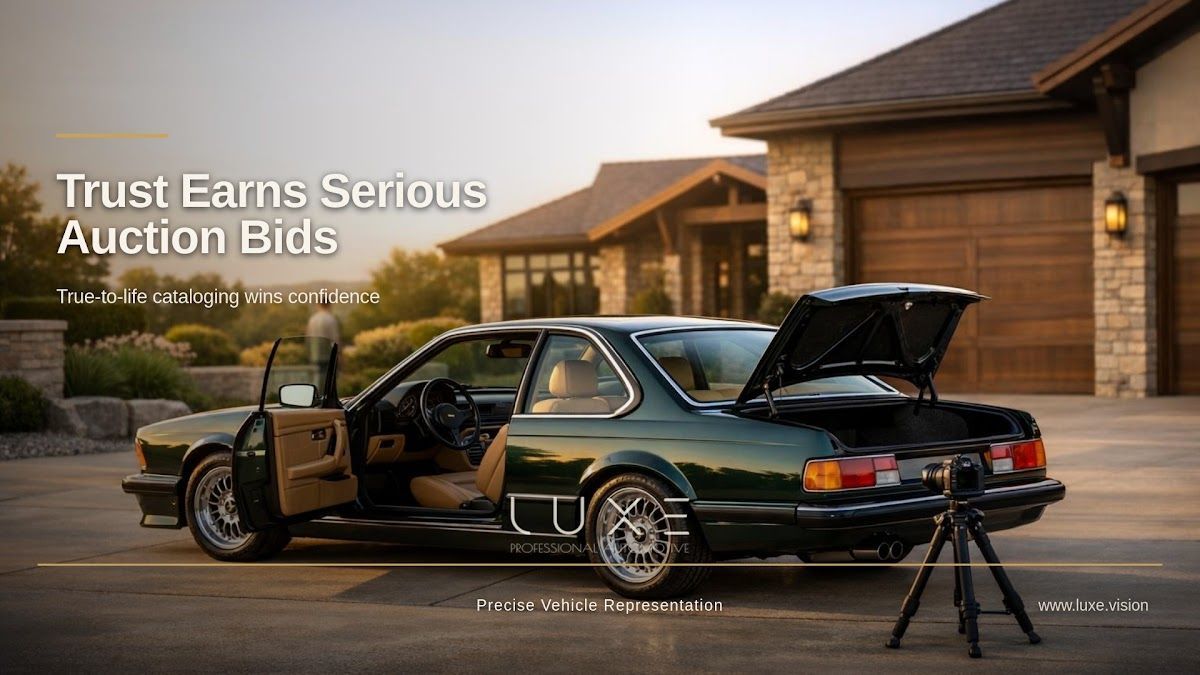

What to Show in a Safeguard Session
A question that always comes up from serious car owners is, "What should I actually document during a safeguarding session?" Whether it's insurance, an appraisal, storage, or preparing for a hand-off, the real peace of mind comes from knowing exactly what is documented—and, just as important, what is left ambiguous.
The baseline for any safeguarding session is clear photos of the exterior from every angle, but it's never enough to stop there. What matters is capturing honesty: each known imperfection, underhood details, trunk, major components, the VIN, and options that matter for value. I tell every owner—especially those protecting a six-figure car or rare classic—that future questions rarely come from what you remember. They come from what you cannot prove.
Start with the full body, then shift to known blemishes—even microscopic stone chips, edge wear, or historic touch-ups. Document the interior’s high-traffic areas: seats, dash, console, sills. Details of wheels, undercarriage, and open panels provide context. When you can show actual flaws, a future insurance adjuster or buyer has nothing left to guess. Trust comes from disclosure, not hiding.
If you are thinking ahead to sale, transport, or estate planning, safeguarding is more than a formality. It is your ground truth. When you are ready to document a collector vehicle in Kansas City, Luxe’s safeguarding service is built around honesty and experience. No generic packages. It’s always tailored to your real risks.
Bring real questions—I am always particular and happy to help you figure out what actually matters for your car’s story.
Jaikeb Lawrence